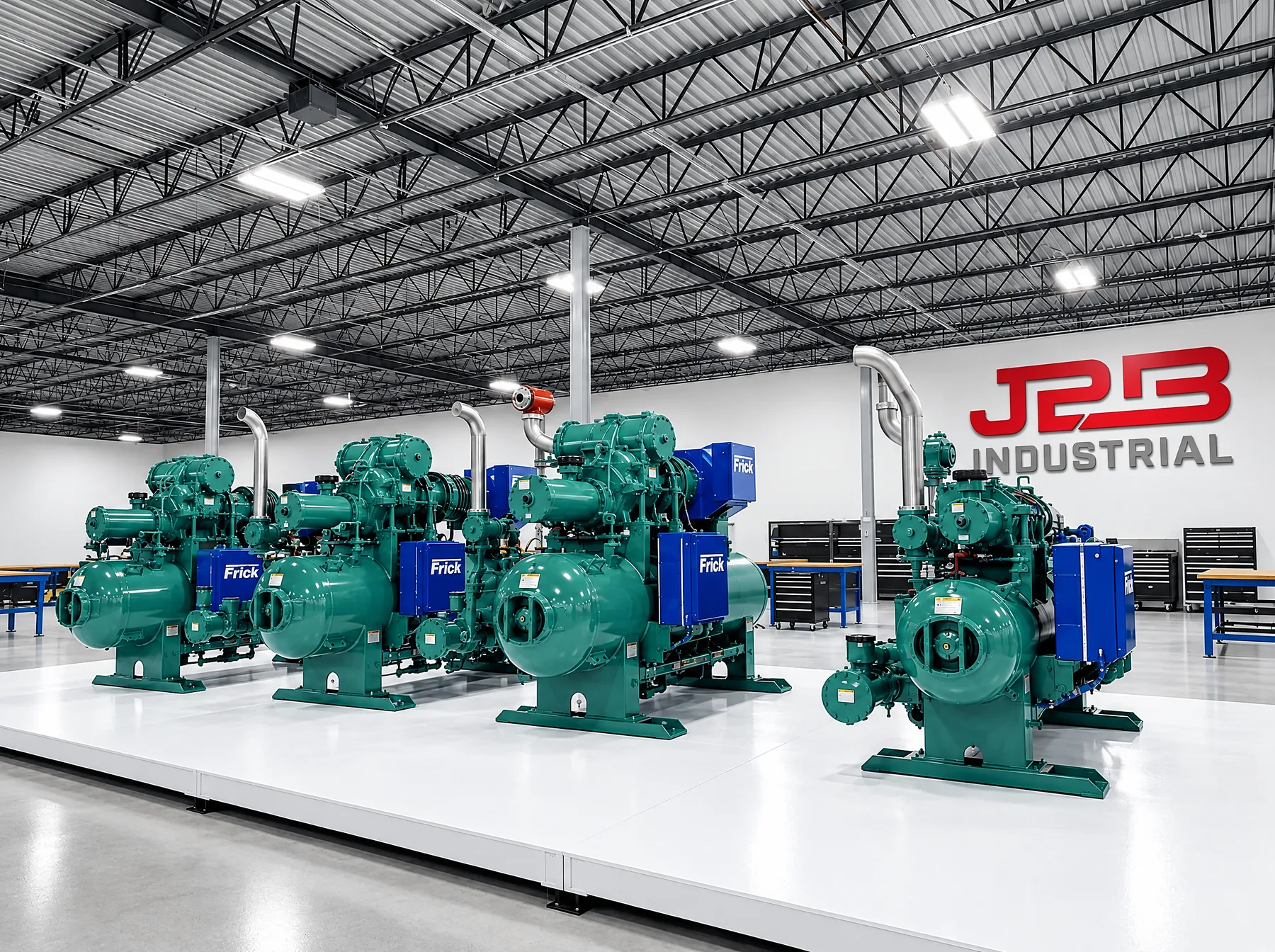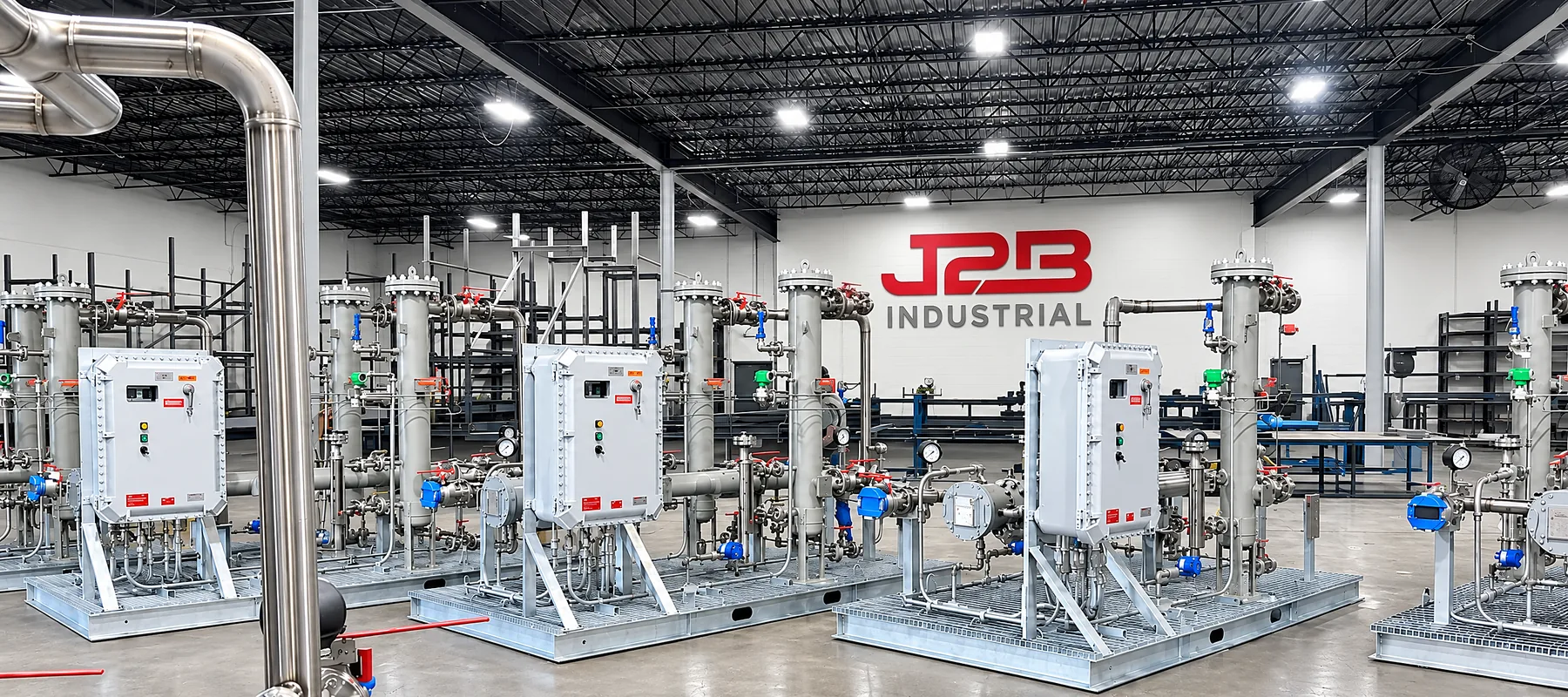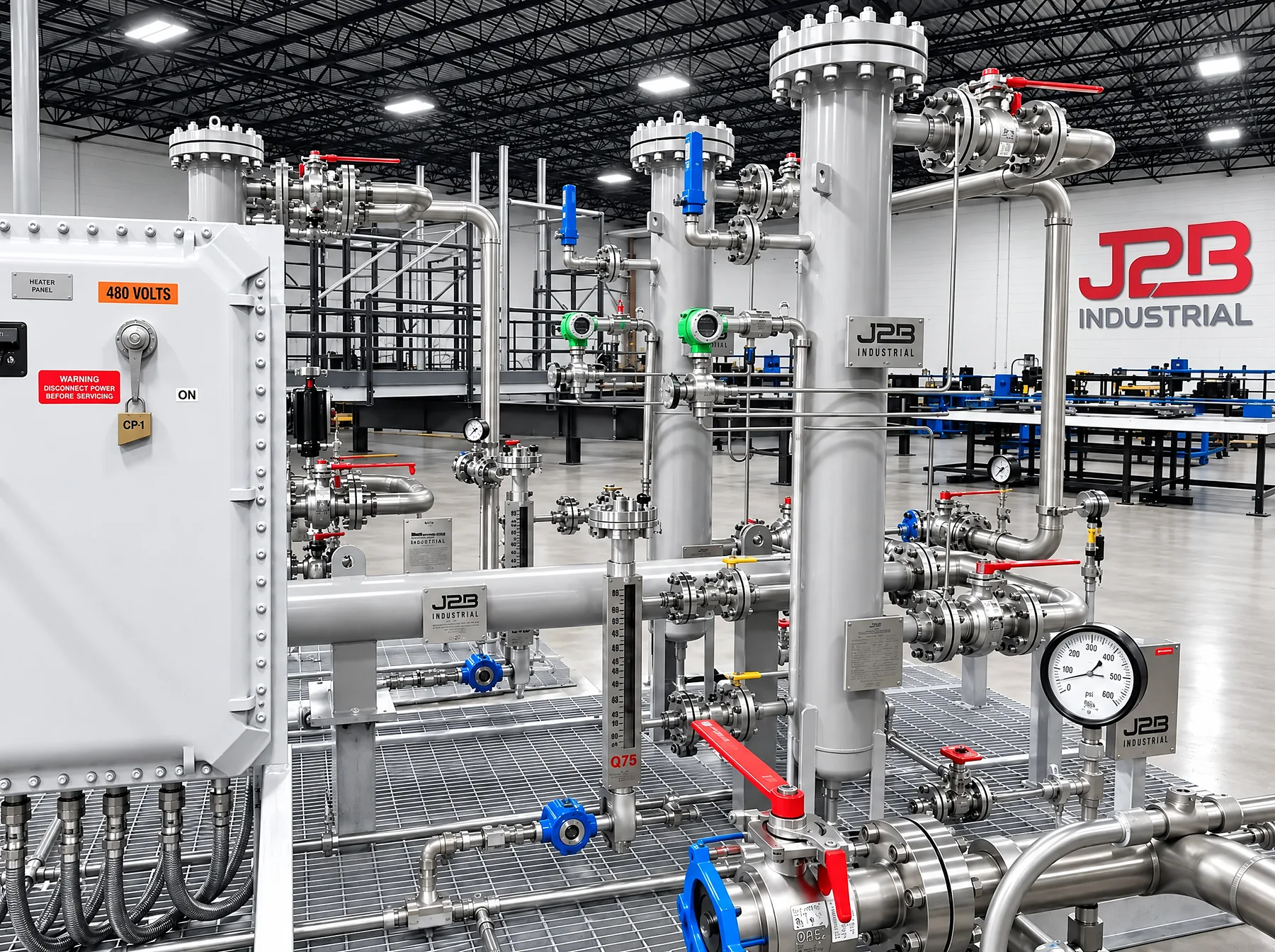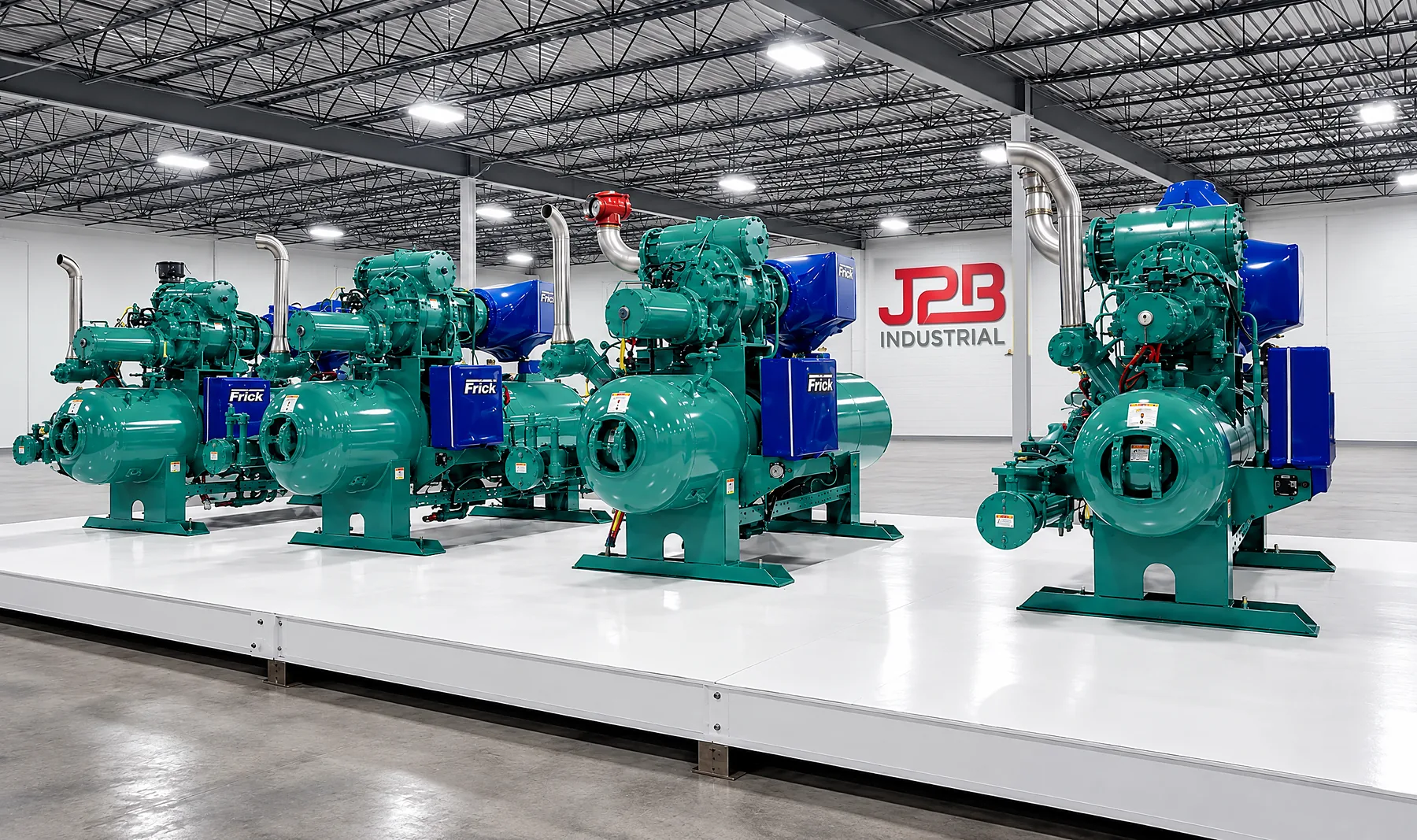
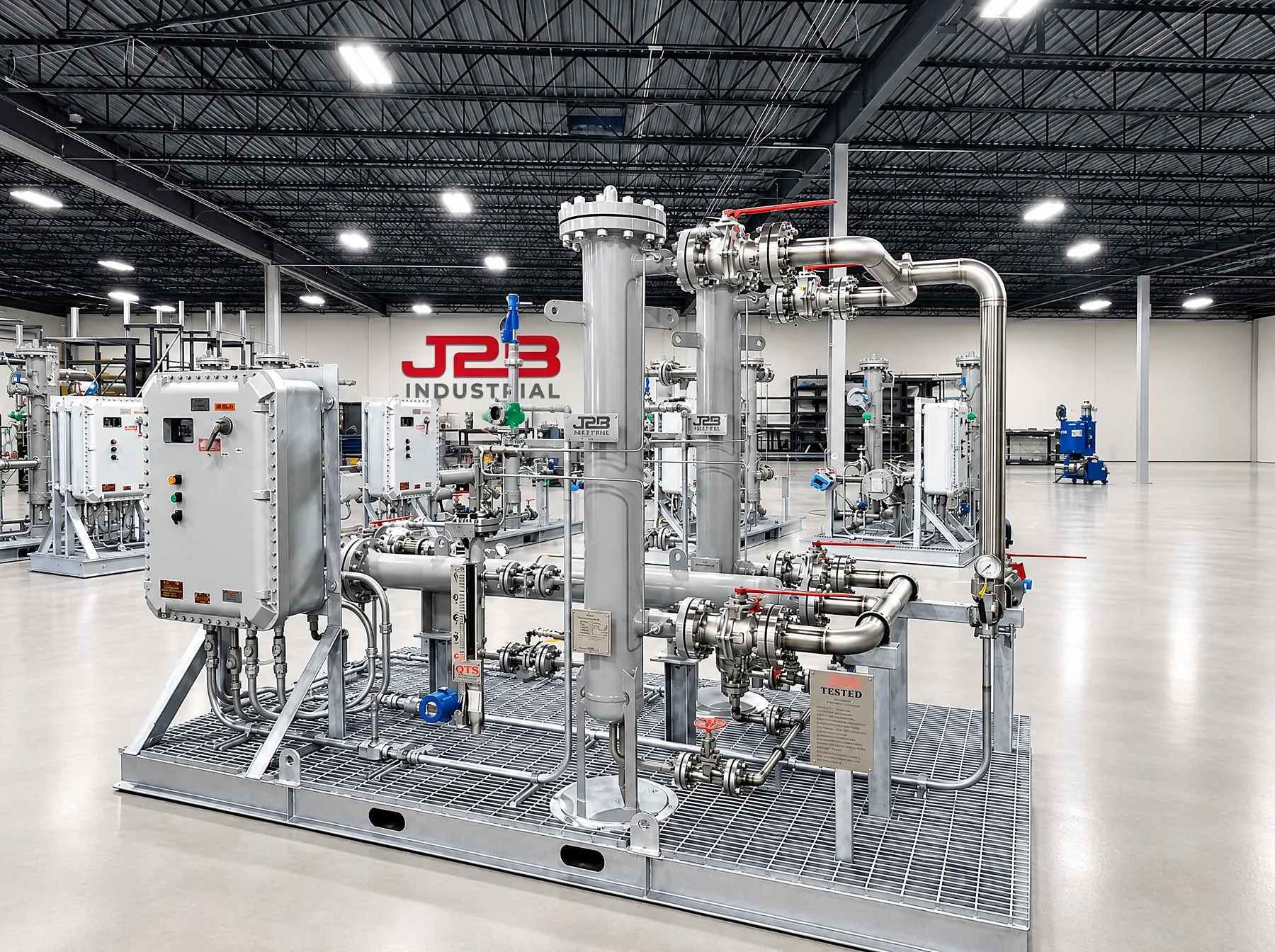
A gas turbine on a data center site cannot make a single megawatt on its own. Before first fire it needs gas at the right pressure and quality, clean cooled oil, a way to reject heat, often high-purity water, and a shutdown system that can isolate fuel in seconds. That surrounding equipment is the balance of plant, and on most onsite power projects it decides the energization date as much as the turbine does.
This primer walks through each system an engineer or developer has to scope around a turbine, what sets its size, and which questions to answer early. For the market picture, including interconnection timelines and turbine backlogs, see our briefing on behind-the-meter power for AI data centers.
Why the question keeps coming up
Data centers used about 4.4% of US electricity in 2023, and the Department of Energy's Lawrence Berkeley National Laboratory report projects 6.7% to 12% by 2028.1 A growing share of that load is being planned around data center onsite power generation. Global Energy Monitor counted 189 GW of gas-fired capacity planned for onsite data center power through the first half of 2026, as reported by Axios.2 Most of it is still announced or in development, but each project that moves forward needs the same set of supporting systems.
The turbine package is only one piece
Turbine OEMs now ship highly integrated packages. GE Vernova says its LM2500XPRESS is up to 95% factory assembled, arrives in 10 modules, has 27 electrical interconnects against 130 or more for a traditional plant, and has its module systems flushed at the factory.3
That shortens the turbine's own install. Fuel conditioning, heat rejection, water and plant controls still have to be engineered for the site, built, tested and tied in. If those arrive late, a turbine that installs in weeks sits idle.
1. Fuel gas: pressure and quality
Pressure. Fuel gas has to enter the combustor above compressor discharge pressure, so the turbine's pressure ratio sets the minimum. The EPA's Catalog of CHP Technologies notes that many aeroderivative units run compression ratios around 30:1 and need a high-pressure external fuel gas compressor, while industrial frame units at up to 16:1 often do not.4 In its example table, a 44.5 MW turbine needs 538 psig at the fuel inlet. Compressing from a 55 psig supply takes about 1,370 kW for that one machine; from a 250 psig supply it takes about 310 kW.4 On a site with a fleet of turbines, that parasitic load is real capacity you are not selling to the data hall.
Quality. The turbine burns whatever reaches its fuel control valve. Liquids and particulates have to come out, and the gas has to stay superheated above its dew point through every pressure drop. Our fuel gas conditioning primer covers the conditioning train in detail. The packaged equipment is on our fuel gas conditioning systems page.
Answer early: What is the guaranteed minimum supply pressure at the site boundary? Do you have several gas analyses, or one? Is a fuel gas compressor in the turbine supplier's scope, the gas utility's, or yours?
2. Lube oil: clean, cooled oil through start, run and rundown
Every turbine and generator bearing depends on oil at the right pressure, temperature and cleanliness. Solar Turbines' Titan 130 generator set spec, for example, lists an integrated lube oil system with a turbine-driven main pump, an AC motor-driven pre/post pump, a backup pump, a lube oil filter, and an oil cooler and oil heater as options.5
What sits on the turbine package and what sits off it varies by OEM and model. The items that commonly fall to the balance of plant are the oil coolers and their heat rejection, oil conditioning or purification, and the supporting piping. Rundown protection matters most: the bearings still need oil as the shaft coasts down after a trip or a loss of power.
Our lube oil systems are built to the equipment maker's flow, pressure, temperature and cleanliness requirements, with pump changeover and alarms function-tested before shipment.
3. Cooling: heat rejection and the hot-day problem
A turbine plant rejects heat from lube oil coolers, generator coolers and, on some packages, compressor intercoolers. A closed water or glycol loop carries that heat to exchangers, air coolers or a tower. Our cooling water and glycol systems are sized from the heat load, the supply and return temperatures at each user, and the site's freeze protection needs.
Ambient temperature matters for a second reason. Gas turbines are rated at 59°F at sea level. The EPA catalog's example machine drops to 80% of rated output at 100°F, and cooling inlet air by 40 to 50°F on a hot day can raise output by 15 to 20%.4 A data center load does not drop on a hot afternoon. If you size the fleet at ISO conditions, you will be short on the days that matter. Hot-day derate, and whether you will use inlet cooling to recover it, belongs in the earliest sizing work.
4. Water: demineralized supply for injection, fogging and washing
Whether a turbine needs water depends on how it controls NOx and how you plan to recover hot-day output. Water injection is a long-standing way to control NOx, and a 2022 technology memo prepared for the EPA states that the water "must be of high quality (e.g. demineralized water) to prevent deposits and corrosion" in the turbine.6 The same memo notes that existing simple cycle facilities often lack demineralized water treatment, leaving owners to build it, rent it or truck water in.6 Water injection is most often used on smaller frame and aeroderivative units.6
If water injection is how a unit meets its NOx limit, federal rules require a continuous monitoring system that records fuel consumption and the water-to-fuel ratio.7 That puts the water system inside the compliance boundary, so its instruments and controls need the same rigor as the turbine's.
Inlet fogging, one way to recover hot-day output, also runs on demineralized water. One fogging supplier describes pumping demineralized water to 1,000 to 2,000 psi.8
Purity limits come from the turbine OEM and the permit. Our demineralized water systems take raw or municipal feed through pretreatment, reverse osmosis and polishing to storage and forwarding.
5. Controls and safety shutdown
The fuel system has to fail safe. NFPA 37 sets fire safety criteria for stationary engines and gas turbines; its scope statement names emergency, standby and peak power uses, so confirm with the authority having jurisdiction how it applies to a prime power plant.10 The standard calls for a manual shutoff valve to isolate the fuel supply. A trade summary of the standard also lists two automatic safety shutoff valves in the gas train, which stop fuel when the unit is not running or is running abnormally.9 The local authority having jurisdiction and the turbine OEM's requirements set the final scope.
In practice, the balance-of-plant controls do three jobs:
- Run each skid: heater, level and pressure control
- Shut down safely to the cause and effect matrix, with shutdown valves that stroke and reset correctly
- Talk to the turbine and plant control systems with mapped, verified signals
Each of these can be proven in the shop. Our article on factory acceptance testing for fuel gas skids lists what that test should show. The packaged scope is on our controls and safety shutdown page.
The balance of plant at a glance
| System | What it does for the turbine | What the turbine OEM sets | What the site sets |
|---|---|---|---|
| Fuel gas conditioning | Delivers clean, dry, superheated gas at controlled pressure | Pressure, temperature, superheat, filtration | Supply pressure, gas analysis |
| Fuel gas compression | Raises supply gas above combustor pressure | Required inlet pressure | Available supply pressure |
| Lube oil | Clean, cooled oil to bearings, including rundown | Flow, pressure, temperature, cleanliness | Cooling medium, ambient range |
| Cooling water and glycol | Rejects heat from oil, generator and other users | Heat loads and temperatures | Heat sink, freeze protection |
| Demineralized water | Water for NOx injection, fogging or washing | Purity limits, flow | Feed water analysis, permit |
| Controls and shutdown | Runs the skids, trips safely, reports to plant control | Interface signals, trip logic | Area classification, codes |
At fleet scale, the balance of plant becomes a production problem
A campus powered by 20 turbines needs 20 sets of these systems, delivered in the order the turbines land. That is where engineering each set separately stops working. One configuration, proven on a first article and repeated under configuration control, gives you identical units, common spares and one set of operator procedures. Our fleet programs page explains how that runs, and the balance-of-plant packaged systems page lists the scope.
> "The turbine may be mechanically installed, the electrical systems energized, and the controls ready, but if the fuel gas does not meet the turbine OEM's inlet specifications, the turbine cannot be released for operation. The fuel gas conditioning system does two critical things: it keeps the gas superheated to the OEM's margin above its dew point, often 50°F or 60°F, so liquid hydrocarbons do not condense before the combustion system, and it is the final filtration and coalescing barrier protecting the fuel metering valves, control valves and nozzles. The superheat margin, dew-point basis, filtration efficiency, allowable liquid carryover and pressure drop all have to come from that specific turbine OEM's fuel gas specification." > > Thomas Jennings, CEO, J2B Industrial
We also integrate and supply gas compression packages as part of the balance of plant.
On the water side, we build the water injection forwarding skids and inlet fogging water supply skids as well as the demineralized water plant that feeds them.
What to send when you are scoping balance of plant
- Turbine model, count and the OEM's fuel, lube oil and water specifications
- Site gas analyses and the guaranteed minimum supply pressure
- Ambient range, hot-day design point and area classification
- NOx control method and permit limits
- Redundancy philosophy for pumps, filters and heaters
- Unit delivery dates, so the balance of plant can be scheduled against them
FAQ
What is balance of plant for a gas turbine?
Balance of plant is everything around the turbine that it needs to run: fuel gas conditioning and compression, lube oil, cooling, water treatment, compressed air, electrical, controls and the piping between them.
Does a gas turbine for a data center need water?
Often, yes. Units that use water injection for NOx control need demineralized water, and inlet fogging and compressor washing use it too. Simple cycle sites often do not have demineralized water treatment, so it has to be built, rented or delivered.6
Why do aeroderivative turbines often need a fuel gas compressor?
They run higher compression ratios, around 30:1 for many models, so the fuel must be delivered at higher pressure than many site gas supplies provide.4
How does hot weather affect onsite data center power?
Turbine output falls as inlet air warms. In the EPA's example, output drops to 80% of rating at 100°F.4 Size the fleet, or plan inlet cooling, for the hot-day load.
- US Department of Energy, "DOE Releases New Report Evaluating Increase in Electricity Demand from Data Centers," 20 December 2024, on LBNL's 2024 United States Data Center Energy Usage Report. https://www.energy.gov/articles/doe-releases-new-report-evaluating-increase-electricity-demand-data-centers
- Axios, 26 August 2026, on Global Energy Monitor's US gas pipeline update, republished by Human Progress. https://humanprogress.org/us-data-centers-are-driving-a-surge-in-gas-fired-power-projects/ (original: https://www.axios.com/2026/08/26/global-energy-monitor-us-natural-gas-projections)
- GE Vernova, LM2500 product page, LM2500XPRESS section. https://www.gevernova.com/gas-power/products/gas-turbines/lm2500
- US EPA Combined Heat and Power Partnership, Catalog of CHP Technologies, September 2017, Section 3: Combustion Turbines (fuel supply pressure, Table 3-3, and Figure 3-5). https://www.epa.gov/sites/default/files/2015-07/documents/catalog_of_chp_technologies.pdf
- Solar Turbines, Titan 130 Gas Turbine Generator Set specification sheet, as hosted by Global Power Supply. https://www.globalpwr.com/wp-content/uploads/cut-sheets/gps-titan130-spec-sheet.pdf
- Sargent & Lundy for Eastern Research Group, "Combustion Turbine NOx Control Technology Memo," Rev. 1, January 2022, published by the US EPA. https://www.epa.gov/system/files/documents/2022-03/combustion-turbine-nox-technology-memo.pdf
- 40 CFR § 60.4335(a), via Cornell Legal Information Institute. https://www.law.cornell.edu/cfr/text/40/60.4335
- MeeFog, "Technology." https://meefog.com/technology/
- Consulting-Specifying Engineer, "Defining NFPA 37," Wesley Stiles, PE, 16 December 2015. https://www.csemag.com/articles/defining-nfpa-37/
- National Fire Protection Association, NFPA 37, Standard for the Installation and Use of Stationary Combustion Engines and Gas Turbines, scope statement. https://www.nfpa.org/codes-and-standards/nfpa-37-standard-development/37